
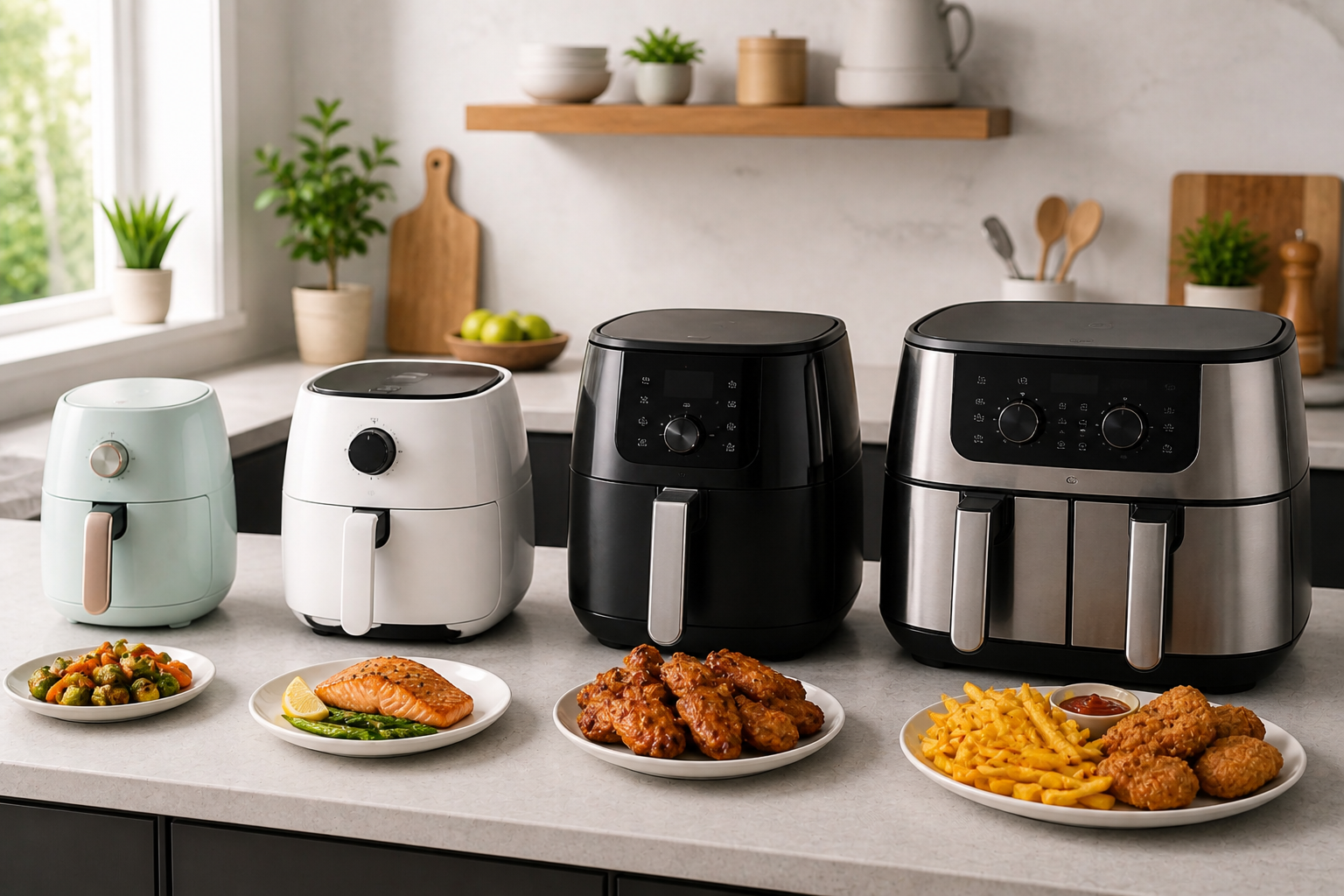
Choosing the right air fryer size can feel confusing at first. The short answer is this: the size you need depends on how many people you cook for, what types of meals you make, and how often you plan to use it.
Buying too small means cooking in multiple batches. Buying too large wastes space and energy. The goal is to find the balance between convenience and efficiency.
Let’s break down everything you need to know so you can confidently choose the perfect air fryer size for your kitchen.
Why Air Fryer Size Matters More Than You Think
Air fryer size directly affects:
- Cooking capacity
- Meal prep efficiency
- Kitchen space usage
- Energy consumption
A poorly sized air fryer can turn a convenient appliance into a frustrating one. If you constantly need to cook in batches, you lose the time-saving advantage.
On the other hand, oversized models may feel bulky and unnecessary for small households.
Understanding Air Fryer Size Measurements
Air fryer sizes are usually measured in quarts (QT) or liters (L).
Here’s a quick conversion:
- 2–3 QT → Small
- 4–5 QT → Medium
- 6–8 QT → Large
- 9+ QT → Extra large or dual-basket
These numbers represent basket capacity, not overall appliance size.
Air Fryer Size Guide by Household
1–2 People (Small Air Fryer: 2–3 QT)
If you live alone or cook for one other person, a compact air fryer works well.
Best for:
- Snacks
- Small meals
- Quick reheating
Pros:
- Space-saving
- Energy-efficient
- Faster cooking
Cons:
- Limited capacity
- Not ideal for meal prep
2–4 People (Medium Air Fryer: 4–5 QT)
This is the most popular size range.
Best for:
- Everyday cooking
- Small family meals
- Balanced portion sizes
Pros:
- Versatile
- Fits most kitchens
- Handles common recipes
Cons:
- May require batching for large meals
4–6 People (Large Air Fryer: 6–8 QT)
Larger households benefit from increased capacity.
Best for:
- Family dinners
- Cooking proteins in larger portions
- Preparing multiple servings
Pros:
- Fewer cooking cycles
- More flexibility
- Better for meal prep
Cons:
- Takes up more counter space
6+ People or Meal Prep (Extra Large: 9+ QT)
If you cook for a large family or prepare meals in bulk, bigger is better.
Best for:
- Batch cooking
- Weekly meal prep
- Cooking multiple items
Pros:
- Maximum efficiency
- Saves time
- Handles large portions
Cons:
- Higher energy use
- Larger footprint
Basket vs Dual-Basket Air Fryers
Size is not just about capacity—it’s also about layout.
Single Basket
- Simpler design
- Easier to use
- Limited to one food type at a time
Dual Basket
- Two separate cooking zones
- Cook different foods simultaneously
- More flexibility
Dual-basket models are ideal for families or those who want variety in one cooking cycle.
What Foods Do You Cook Most?
Your cooking habits should guide your size choice.
Small Meals and Snacks
- Wings
- Fries
- Vegetables
Small or medium sizes work fine.
Full Meals
- Chicken breasts
- Fish
- Mixed vegetables
Medium to large sizes are better.
Bulk Cooking
- Meal prep
- Large proteins
- Multiple servings
Large or extra-large units are ideal.
Meal Prep Considerations
If you plan to use your air fryer for weekly meal prep, size matters even more.
Small air fryers slow you down because of repeated batches.
Larger air fryers allow you to:
- Cook more food at once
- Save time
- Maintain consistent results
This is especially useful for people with busy schedules.
Kitchen Space and Storage
Before choosing a size, consider your kitchen layout.
Ask yourself:
- How much counter space do I have?
- Will I store it or leave it out?
- Is my kitchen compact or open?
For smaller kitchens, space becomes a major factor. If you’re concerned about how appliances fit safely in limited areas, read Are air fryers safe for apartments and small kitchens? to understand placement and safety considerations.
How Size Affects Cooking Performance
Larger air fryers typically have:
- Better airflow distribution
- More consistent cooking
- Less overcrowding
Smaller models can still perform well but require careful spacing.
Overcrowding reduces crispiness and leads to uneven results.
Energy Use and Size
Larger air fryers use more wattage, but they also cook more food at once.
Smaller units:
- Use less power per cycle
- May require multiple cycles
Larger units:
- Use more power per cycle
- Save time with fewer cycles
The difference in overall energy cost is usually minimal.
Common Mistakes When Choosing Air Fryer Size
Choosing Too Small
Many people underestimate how quickly space fills up.
This leads to:
- Multiple cooking rounds
- Longer prep time
- Frustration
Choosing Too Large
Oversized units may:
- Take up too much space
- Feel unnecessary
- Be harder to store
Ignoring Cooking Habits
Size should match how you actually cook, not just household size.
Real-Life Examples
Example 1: Single User
A 2–3 QT air fryer works perfectly for:
- Snacks
- Quick meals
- Minimal cooking
Example 2: Couple
A 4–5 QT model allows:
- Cooking protein and sides
- Moderate meal prep
- Efficient daily use
Example 3: Family of Four
A 6–8 QT air fryer handles:
- Full meals
- Larger portions
- Faster cooking
Example 4: Meal Prep User
A 9+ QT or dual-basket model:
- Saves time
- Handles bulk cooking
- Improves workflow
How to Test Your Ideal Size
If you’re unsure, try this simple method:
- Visualize your typical meal
- Place that amount of food on a plate
- Compare it to basket capacity
This gives a realistic expectation of what fits.
Is Bigger Always Better?
Not always.
While larger air fryers offer more flexibility, they are not necessary for everyone.
Choose based on:
- Frequency of use
- Portion size
- Kitchen space
Balance is key.
Final Thoughts
So, what size air fryer do you really need?
It depends on your household size, cooking habits, and kitchen space. For most people, a medium (4–5 QT) air fryer offers the best balance between capacity and convenience.
However, if you cook frequently, prepare meals in advance, or feed multiple people, upgrading to a larger model can save time and effort.
Choosing the right size ensures your air fryer remains a helpful tool—not a frustrating one.